Playtime Online 23: SimCityEDU Office Hours featuring me as guest panelist! :)
Friday, November 8, 2013
Wednesday, July 24, 2013
Saturday, June 15, 2013
Beyond Badges: Why Gamify?


Tuesday, June 11, 2013
HotChalk Interview: "Teacher Makes Classes Seem More Like Video Games"

I was recently interview about "gamification" and game-based learning. Here's the link to the article that appeared on HotChalk's "Inspired Teachers" page:
http://lessonplanspage.com/teacher-makes-classes-seem-more-like-video-games/
Thursday, May 2, 2013
Blogging for Edutopia

I am excited to now be blogging for Edutopia! Check out my first post: Gamifying Student Engagement:

Friday, April 12, 2013
IOSSBR Spring Conference

Below is a picture from today's International Organization of Social Sciences and Behavior Research (IOSSBR) Spring Conference (http://www.iossbr.com/

Friday, March 15, 2013
Video Game Design in the Social Studies Classroom


Below are links to some of my student's examples (click each picture to play):


Wednesday, February 27, 2013
My Interview in Streaming Media Magazine

I was recently interviewed by Streaming Media magazine about video in the classroom. My interview is in the February/March 2013 issue. Here's the link to the article, The State of Education Video http://www.streamingmedia.com/
Wednesday, January 30, 2013
Look For Me In NJEA Magazine
I wrote a reflection about the class-created iPad book my students authored and submitted it to NJEA Review magazine. My article appears in the February issue, which will be mailed this week to all NJEA members. The article, titled Have Your Students Write an Ebook, appears on p. 18. Here's the link to the PDF version (the article begins on p. 20 in the PDF): http://www.njea.org/


Wednesday, December 5, 2012
Class-Created iPad Book Now Live in the iBookstore!

Our class-created book, The Corns Visit the 13 Colonies, is now live (and, global... in 50 countries!) in Apple's iBookstore!

Our book, which is historical fictional, follows Damitria the Unicorn,
Henrietta the Hippocorn, and Willamina the Shnoopacorn on an exciting
trip back in time to visit the original 13 American colonies! The book
features multi-touch widgets, like 3D movable colonial buildings, photo
galleries, an interactive student-created glossary, puzzles, a
sketchpad, and original artwork!
Each chapter and section is the result of collaboration from my 2nd
period seventh grade social studies class. Students researched and
wrote in groups, chose copyright-friendly photos, and created the
overall concept. I edited and compiled using the free Mac app, iBooks Author,
on my MacBook. Each student receives writing credit on page 40 of the
book (thanks to each parent for granting written permission).
The book is a FREE iPad download. If you have an iPad, or know someone
who does, please download it! The students are really proud of their
accomplishment!
The Corns Visit the 13 Colonies: https://itunes.apple.com/us/book/corns-visit-13-colonies/id583368930?mt=11
Tuesday, November 27, 2012
Understanding Economics in U.S. History
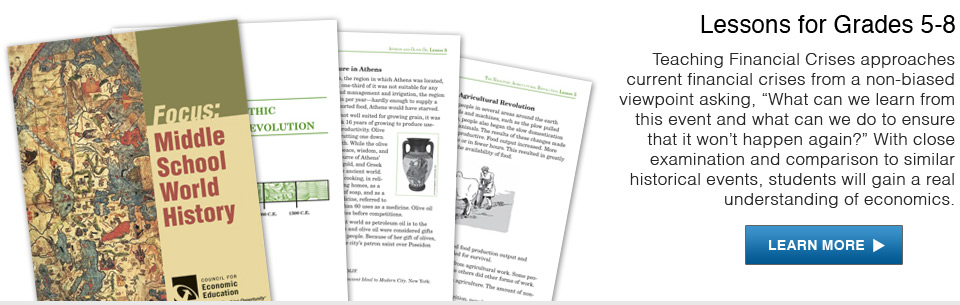
Just got Focus: Middle School World History, a great book of economic lessons from the Council for Economic Education, for my 6th grade world history class! The lessons "use a unique mystery-solving approach to teach U.S. economic history to your high school students." It's an excellent, additional resource.
Here's the link: http://msh.councilforeconed.org/
Friday, October 26, 2012
Creating Interactive SMART Board Lessons - Workshop
Tomorrow morning I am giving a workshop on SMART Boards at Raritan Valley Community College titled, "SMART Boards: Creating Interactive Lessons." I've given the workshop several times at different locations, but not in awhile. Should be fun!
Course Description: Go beyond SMART Board basics - learn a new way to create eye-catching lesson activities, full of customizable tools and templates that you can use to create professional-looking lessons. The Toolkit helps you create engaging content like word games, quizzes, Crossword puzzles and sorting tables. It also offers Adobe Flash tools like hide-and-reveal, drag-and-drop, plus lots more.
Course Description: Go beyond SMART Board basics - learn a new way to create eye-catching lesson activities, full of customizable tools and templates that you can use to create professional-looking lessons. The Toolkit helps you create engaging content like word games, quizzes, Crossword puzzles and sorting tables. It also offers Adobe Flash tools like hide-and-reveal, drag-and-drop, plus lots more.
Sunday, October 21, 2012
NJCSS Workshop
This Wednesday, I am giving a workshop at the NJ Council for the Social Studies (NJCSS) Annual Fall Conference (I am one of the North Jersey Directors). The conference theme is "Social Studies and the Common Core: Moving Forward" and it's being held at the Busch Campus Center, Rutgers, Piscatatway, NJ. My workshop is titled, "Social Media in the Social Studies Classroom," and will focus on building a Professional Learning Networks (PLNs) and using Edmodo in the classroom. I will also unveil the redesigned NJCSS website that I created, along with the Facebook fan page, the Twitter feed, and the Tumblr blog that I curate.
Sunday, October 7, 2012
I'm Published!

I'm published in the latest issue of "Journal of Interactive Learning Research":
The article I co-authored is titled, Civic Participation Among Seventh-Grade Social Studies Students in Multi-User Virtual Environments. Here's our abstract:
Technological
advances on the Internet now enable students to develop participation
skills in virtual worlds. Similar to controlling a character in a video
game, multi-user virtual environments, or MUVEs, allow participants to
interact with others in synchronous, online settings. The authors of
this study created a link between MUVEs and participation in civic
activities by seventh grade students. This purpose of this case study
was to evaluate how face-to-face cooperative structures would translate
to an online setting. The study also assessed whether working
cooperatively in a MUVE would have an effect on student civic
participation. The virtual environment did provide an authentic setting
for students to practice the civic lessons they learned in class.
Student involvement in a participatory culture generally translated to
an increased tendency to be civic-minded.
Here's the to the article link: http://www.editlib.org/j/JILR/
Finally, here's the official citation:
Zieger, L. & Farber, M. (2012). Civic Participation Among Seventh-Grade Social Studies Students in Multi-User Virtual Environments. Journal of Interactive Learning Research, 23(4), 393-410. Chesapeake, VA: AACE.
Saturday, August 25, 2012
Tuesday, August 14, 2012
Upcoming Community College Classes

My course schedule was published today by Raritan Valley Community College. My classes are on page 6 (under "Education") on this downloadable PDF: http://www.raritanval.edu/uploadedFiles/cce/cfa/personal-enrichment_fall2012_class-listing.pdf.
Monday, August 13, 2012
Cape Cod Vacation Photo Book
Sunday, August 12, 2012
Cape Cod Vacation
Hope everyone is enjoying summer! Last week, my family and I went to Cape Cod, as well as Plimoth Plantation. Below is a movie trailer (made with iMovie) about our trip:
http://youtu.be/rPKgEUX4F1M
http://youtu.be/rPKgEUX4F1M
Monday, July 30, 2012
Reading Like A Historian Curriculum

Here's the link to EdWeek article: http://www.edweek.org/ew/articles/2012/07/30/37socialstudies.h31.html?tkn=RTCC6r%2BHufOfbe0OwJYn8pKYTLTzy8Qppb%2FQ&cmp=clp-sb-ncss
Here's the link to the curriculum materials: http://sheg.stanford.edu/?q=node/45
Friday, June 8, 2012
Mister Rogers' Viral Video
As the school year winds down, Mr. Rogers reminds us, it's good to be curious about many things. Thanks PBS Digital Studios for this remix! Brilliant!
Mister Rogers Remixed - Garden of Your Mind, remixed by Symphony of Science's John Boswell.
Subscribe to:
Posts (Atom)